Kisspeptin-10 and the HPG Axis: GnRH Pulsatility Research Guide
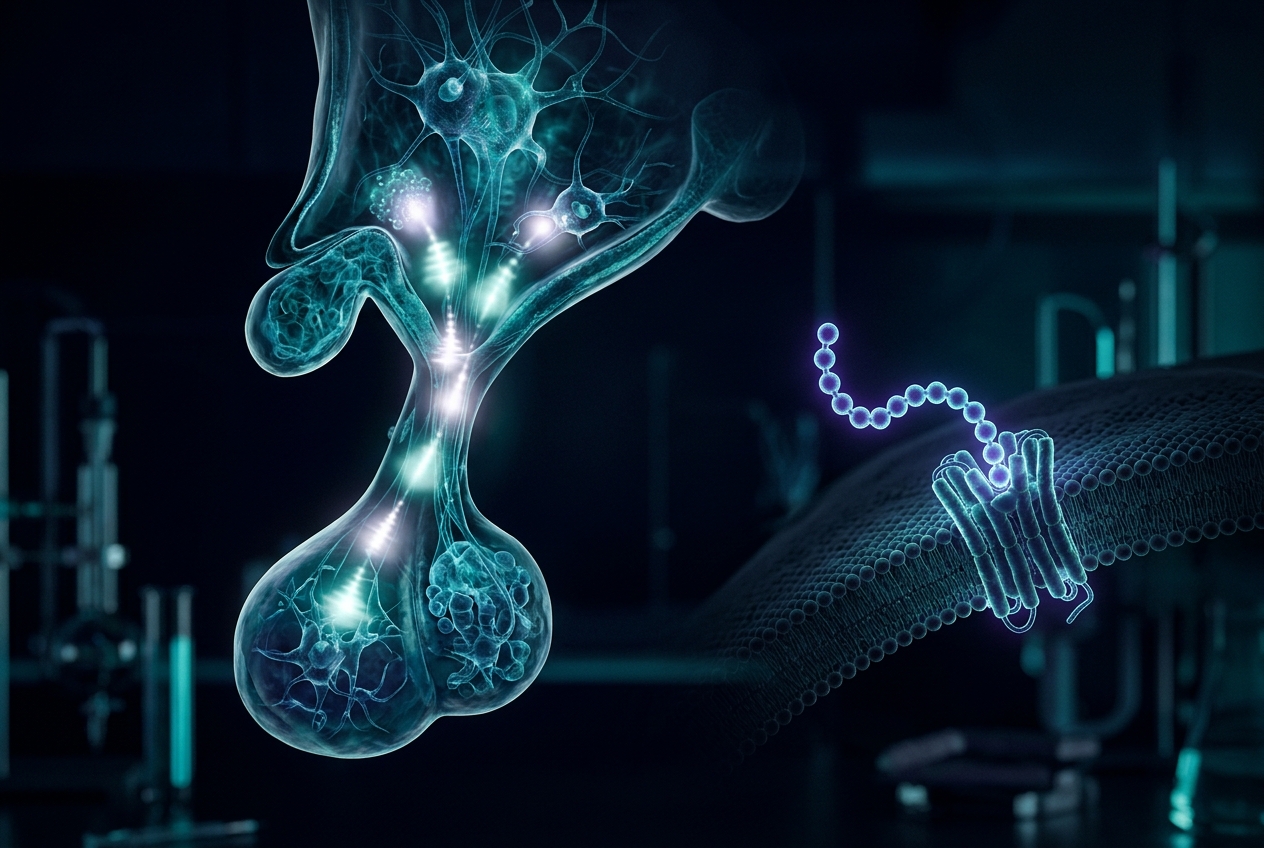
Kisspeptin-10 is the C-terminal decapeptide fragment of kisspeptin, the neuropeptide now recognised as the master upstream trigger of the hypothalamic-pituitary-gonadal (HPG) axis. It acts on the KISS1R (GPR54) receptor on GnRH neurons, stimulating pulsatile gonadotropin-releasing hormone secretion. Because it sits one step above GnRH in the reproductive-endocrine cascade, Kisspeptin-10 is a key tool compound in HPG-axis and reproductive-neuroendocrinology research.
Where it sits in the axis
The reproductive cascade runs in a defined order: kisspeptin neurons -> GnRH neurons -> pituitary gonadotropes (LH and FSH) -> gonads (sex steroids). Kisspeptin-10 lets researchers stimulate the axis at its physiological trigger point rather than bypassing it with direct GnRH analogs. This is important because the axis responds to the pattern of stimulation, not just its presence.
Reference data
| Property | Value |
|---|---|
| Parent molecule | Kisspeptin (KISS1 gene product) |
| Active fragment | C-terminal 10 residues |
| Receptor | KISS1R / GPR54 |
| Residue count | 10 |
| Molecular weight | about 1302 Da |
| Downstream effect | Pulsatile GnRH release, then LH/FSH |
| Plasma half-life | minutes (rapid clearance) |
| Common format | Lyophilised powder |
Why pulsatility matters in research design
The single most important design variable in HPG-axis research is the pattern of exposure. Pulsatile stimulation of the axis maintains gonadotrope sensitivity and drives normal LH/FSH output; continuous, non-pulsatile exposure tends to desensitise and ultimately suppress the axis (the same principle that underlies continuous GnRH-agonist downregulation). Kisspeptin-10's very short half-life is a feature in this context: it clears quickly, which suits bolus-style pulsatile protocols. Research designs that ignore pulsatility frequently produce uninterpretable LH readouts.
Reconstitution and storage
Kisspeptin-10 ships as lyophilised powder. Typical handling:
- Reconstitute in sterile or bacteriostatic water, swirl gently
- Working stock: 1 to 5 mg/mL depending on assay volume
- Reconstituted stability: about 2 to 3 weeks at 2 to 8 degC; aliquot to avoid freeze-thaw
- Lyophilised stability: about 24 months at -20 degC
Because of its rapid clearance, researchers running pulsatile designs typically prepare small single-use aliquots. A reconstitution calculator converts mcg doses to syringe-unit volume.
CoA requirements for bulk purchase
Require batch-level CoAs carrying:
- HPLC purity at or above 98.0%, chromatogram attached
- MS identity with observed vs theoretical monoisotopic mass (about 1302 Da)
- Karl-Fischer water content under 8%
- Counter-ion content and identity
- LAL endotoxin under 0.25 EU/mg for any cell or neuronal-culture application
Confirm the CoA cites Kisspeptin-10 specifically; longer kisspeptin fragments (such as Kisspeptin-54) have very different handling and are not interchangeable.
Bulk sourcing considerations
- Specify the fragment length on the purchase order to avoid receiving a longer kisspeptin variant.
- Aliquot-friendly packaging matters more than usual given the freeze-thaw sensitivity.
- Scale thresholds: per-gram breaks at 25 g, 100 g, and 500 g tiers.
Working with PenLab Peptide
PenLab stocks research-grade Kisspeptin-10 in 10 g, 25 g, 100 g, and 500 g tiers with batch-level HPLC, MS, KF, counter-ion, and LAL endotoxin CoAs. Visit the bulk procurement portal or email sales@penlabpeptide.com.
Products are sold strictly for in-vitro laboratory research by KYC-verified institutional buyers. Not for human or veterinary use.
Related research articles
Research products mentioned
Important Notice: This article is for informational and educational purposes only. All products mentioned are exclusively for scientific research and are not intended for human consumption or therapeutic use.