
Research Blog
Latest news, research insights and scientific updates from PenLab Peptide

GHRP-6 vs GHRP-2 vs Hexarelin: Ghrelin-Receptor Mimetic Comparison for Research Protocols
Side-by-side comparison of the three most-used ghrelin-receptor (GHS-R1a) peptide mimetics in research. Covers potency, cortisol/prolactin spillover, half-life, and bulk sourcing considerations for institutional buyers running GH-axis pharmacology studies.

Thymosin Alpha-1 vs Thymosin Beta-4: Immune Modulation vs Tissue Repair in Research
Two unrelated 'thymosin' peptides with completely different mechanisms and research applications. Thymosin Alpha-1 is a 28-residue immunomodulator; Thymosin Beta-4 is a 43-residue actin-binding tissue-repair signalling molecule. A side-by-side comparison for institutional buyers.

SPPS vs Liquid-Phase vs Recombinant Peptide Synthesis: What Research Buyers Should Know
The three main peptide manufacturing routes have different impurity profiles, scale ceilings, and sequence-length limits. SPPS dominates research-grade supply; LPPS is used for very short peptides at scale; recombinant synthesis is the only route for sequences over 60 residues. A procurement-oriented comparison.

Nordic Region Research Peptide Procurement: Sweden, Denmark, Finland, Norway Compliance Guide
B2B procurement considerations for research peptides across the Nordic region. Covers Swedish MPA, Danish DKMA, Finnish Fimea, and Norwegian NoMA scope distinctions, EU/EEA transit specifics, cold-chain compliance in long winter transit windows, and VAT/import-duty handling for institutional orders.

Peptide Shelf-Life Modeling with Arrhenius Kinetics: QC Decisions for Research Storage
Short-term accelerated-stability data lets QC labs project real-world shelf life for research peptides using the Arrhenius equation. Covers activation-energy estimation, Q10 shortcut rules, storage-decision thresholds, and when to retest a batch versus discard. Practical worked examples for lyophilised and reconstituted products.

ISO 17025 Accredited CoAs: How to Verify a Lab's Accreditation Before Signing a Bulk Contract
A procurement checklist for institutional buyers: how to verify that a research-peptide CoA is issued by a genuinely ISO 17025 accredited third-party lab, covering national accreditation bodies (DAkkS, UKAS, ANAB, CNAS, ENAC), scope-verification procedures, and red flags in fake-accreditation claims.

Peptide Pen vs Vial vs Nasal Spray Formats: Which Is Right for Your Research Protocol?
A practical format-comparison for institutional buyers choosing between peptide pen, lyophilised vial, and nasal-spray delivery formats, covering dosing precision, storage constraints, protocol-fit, and typical use-cases per format.

DACH-Region Research Peptide Procurement: Germany, Austria, Switzerland Compliance Overview
A procurement-focused compliance overview for research institutions in the DACH region (Germany, Austria, Switzerland) sourcing bulk research peptides, covering national research-material rules, VAT reverse-charge for EU-anchored suppliers, Swiss customs procedures, and typical lead-time expectations.

Cold-Chain Temperature Excursion Protocols: What Clinic QA Teams Should Reject on Receipt
A practical guide for clinic and laboratory QA teams: how to interpret temperature-logger data on incoming research-peptide shipments, what excursion thresholds warrant rejection, and how to document the incident for the supplier.

Reconstitution Best Practices for Lyophilised Research Peptides: mL, mg/mL, U-100 Syringe Conversions
A practical reconstitution reference for research-grade lyophilised peptides, covering standard bacteriostatic-water conventions, mL-to-mg/mL working-stock calculations, U-100 insulin-syringe unit conversions, and stability windows post-reconstitution.

LAL Endotoxin Testing for Research Peptides: Chromogenic vs Kinetic-Turbidimetric Methods
A methodology deep-dive on Limulus Amebocyte Lysate (LAL) endotoxin testing for research peptides, comparing the chromogenic and kinetic-turbidimetric methods, the endotoxin-unit thresholds that matter for research use, and what institutional QA teams should verify on the CoA.

GHK-Cu Copper Tripeptide: Dermal, Wound-Healing, and Hair-Follicle Research
A research overview of GHK-Cu (glycyl-L-histidyl-L-lysine copper complex), the naturally-occurring tripeptide-copper complex studied in dermal-repair, wound-healing, and hair-follicle-cycling research models.

Epithalon and the Khavinson Bioregulator Family: 2026 Research Overview
A comprehensive 2026 overview of Epithalon and the wider Khavinson short-peptide bioregulator family, the tetrapeptide series developed at the St. Petersburg Institute of Bioregulation and Gerontology and now studied for tissue-specific gene-expression modulation.

MOTS-c and SS-31 Mitochondrial Peptides: Emerging Longevity-Pathway Research
A 2026 research overview of the two most active mitochondrial-targeted peptides, MOTS-c (mitochondrial ORF of the twelve S-rRNA) and SS-31 (elamipretide / Szeto-Schiller-31). Coverage includes mechanism, published outcomes, and bulk sourcing considerations for longevity-research programmes.

CJC-1295 + Ipamorelin Research Stack: GHRH-Analog and Ghrelin-Mimetic Pharmacology
A pharmacology overview of the CJC-1295 + Ipamorelin research stack, the two peptides work on complementary receptor systems (GHRH-R and GHS-R1a) to produce a synergistic pulsatile response in growth-hormone-secretagogue research models. Covers receptor binding, half-life, and bulk sourcing considerations.

How to Evaluate a Research Peptide Supplier: A 12-Point B2B Checklist
A 12-point evaluation framework for institutional buyers vetting a new research-peptide supplier, covering CoA rigour, manufacturing traceability, logistics SLAs, payment terms, regulatory compliance, and the specific interview questions to ask before signing a supply contract.

Tirzepatide vs Semaglutide: Research Applications and Bulk Supplier Comparison
A side-by-side research comparison of tirzepatide and semaglutide, the two dominant incretin-mimetic peptides in 2026 clinical research, covering receptor pharmacology, published outcomes, laboratory dosing conventions, and what institutional bulk buyers need to know.

EU vs US Research Peptide Suppliers: Shipping, Customs, and Lead Times Compared
A side-by-side comparison of European versus American research-peptide supplier networks for institutional buyers, covering hub geography, customs procedures, lead-time SLAs, and the specific compliance frameworks that matter when shipping across the Atlantic.

Research Peptide CoA Standards: What Clinic Procurement Teams Should Verify
A practical checklist for clinic and laboratory procurement teams: the seven analytical fields every research-peptide Certificate of Analysis should carry, how to spot fabricated CoAs, and what publication-track studies demand beyond the vendor default.

How Clinics Source Research Peptides in Bulk: A 2026 Procurement Guide
A practical 2026 procurement guide for licensed clinics, laboratories and CROs sourcing research-grade peptides at scale, covering KYC verification, Certificate of Analysis standards, EU vs US supplier lead times, and how tiered bulk pricing works across the top vendors.

BPC-157 Tendon Repair Research for Australian Laboratories: Dual-Pathway Models, Reconstitution & QA Standards
BPC-157 has emerged as one of the most-studied peptides in tendon and soft-tissue repair research. This guide consolidates the current Australian-laboratory perspective: dual-pathway mechanisms, in-vitro synergy with TB-500, reconstitution and storage standards, and the QA documentation Australian institutions require for compliant peptide work.

Tirzepatide Mechanism of Action: Dual GIP/GLP-1 Receptor Agonism in Adipocyte Models
Tirzepatide is a synthetic peptide currently under intensive investigation as a dual GIP/GLP-1 receptor agonist in metabolic-pathway and body-composition research models. This article examines its receptor pharmacology, downstream...

Retatrutide Phase 3 Trial Data Summary for Laboratory Research
Retatrutide is a next-generation triple agonist (GIP/GLP-1/glucagon receptor) peptide currently generating significant interest in metabolic-pathway research. This article summarises publicly available Phase 3 trial registry data and...

The Future of Peptide Science
Peptide science stands at an exciting crossroads, with emerging technologies and new discoveries promising to transform how we understand and utilize these remarkable molecules. From advanced delivery systems to novel therapeutic...

Mechanism of Action of Tirzepatide: Dual GIP/GLP-1 Agonism in Adipocyte Models
Tirzepatide is attracting considerable attention in metabolic research circles. As a dual agonist of GIP and GLP-1 receptors, it offers a unique pharmacological profile that researchers are exploring in detail in adipocyte models and...

Semaglutide Pharmacokinetics: Half-Life and Bioavailability in Research Models
Semaglutide remains one of the most studied peptides in metabolic research. Understanding its pharmacokinetic profile is essential for designing accurate in-vitro and ex-vivo experiments. This article reviews the key laboratory data on...

BPC-157 in Tendon Repair Research Models: Current In-Vitro Data
BPC-157 is intensively studied in laboratories for its effects in tendon and tissue repair models. This post summarizes current in-vitro findings and examines relevant signaling pathways.

BPC-157 Tendon Repair Research: Dual-Pathway Models in Laboratory Settings
BPC-157 has become a staple in tendon and soft-tissue repair research. Laboratories worldwide are examining its dual-pathway mechanisms in controlled in-vitro systems. This article summarises the current understanding.

Quality Standards in Peptide Research
Maintaining rigorous quality standards is fundamental to peptide research. From synthesis to storage, every step must adhere to strict protocols to ensure valid, reproducible results. This article explores the key aspects of peptide...

Retatrutide vs Tirzepatide: Comparing Triple and Dual Receptor Agonism
Retatrutide and tirzepatide are two of the most studied peptides in metabolic research. This article compares their receptor pharmacology based on available laboratory data.

TB-500 Healing Protocol Research: Actin Sequestration in Tissue Repair Models
TB-500 is widely used in tissue-repair research due to its unique interaction with actin. This article reviews the current laboratory understanding of its mechanisms.

Tirzepatide Mechanism of Action: Dual GIP/GLP-1 Agonism in Adipocyte Models
Tirzepatide generates significant interest in metabolic research as a dual GIP and GLP-1 receptor agonist. This article details its pharmacological profile in laboratory models.

Tesamorelin and Visceral Adipose Tissue: GHRH-Analog Research Mechanisms
Tesamorelin, a growth-hormone-releasing hormone (GHRH) analogue, is frequently studied in visceral adipose tissue research. This article outlines the key laboratory mechanisms under investigation.

Semaglutide Mechanism of Action: Pharmacokinetic Profile in Research Models
Laboratory studies reveal semaglutide's extended half-life and metabolic pathways. Understanding pharmacokinetic profiles is essential for accurate experimental design in research settings.

Bioregulators: Peptide Research Breakthroughs
Bioregulators represent a fascinating class of short-chain peptides that have emerged from decades of research into cellular communication and tissue-specific function. Originally developed through extensive research programs, these...

Tirzepatide vs Retatrutide: Comparative Receptor Pharmacology in 2026 Research
As both peptides advance in metabolic research, laboratories are increasingly comparing tirzepatide and retatrutide head-to-head. This article examines the key pharmacological differences based on current in-vitro data.

BPC-157 in Tendon Repair Research: In-Vitro Models and Synergy with TB-500
BPC-157 is extensively studied in tissue repair models. This article summarizes current in-vitro data and potential synergy with TB-500.

Retatrutide Receptor Triplet (GIP/GLP-1/Glucagon): Latest Research Insights
Retatrutide’s unique triple-receptor profile continues to generate interest in advanced metabolic research. This article reviews the latest laboratory findings on its receptor triplet pharmacology.

TB-500 in Tissue Repair Research: Actin Sequestration Models
TB-500 is widely used in tissue repair research due to its interaction with actin. This article provides an overview of current laboratory insights.

Semaglutide Research-Grade Peptide: Purity, COA & Laboratory Specifications
When working with semaglutide in research settings, purity and documentation are critical. This article outlines the quality standards laboratories should expect.

Tirzepatide Mechanism of Action: Dual Agonism in Metabolic Models
Tirzepatide has attracted significant interest in metabolic research as a dual agonist of GIP and GLP-1 receptors. This article details its pharmacological profile in laboratory models.
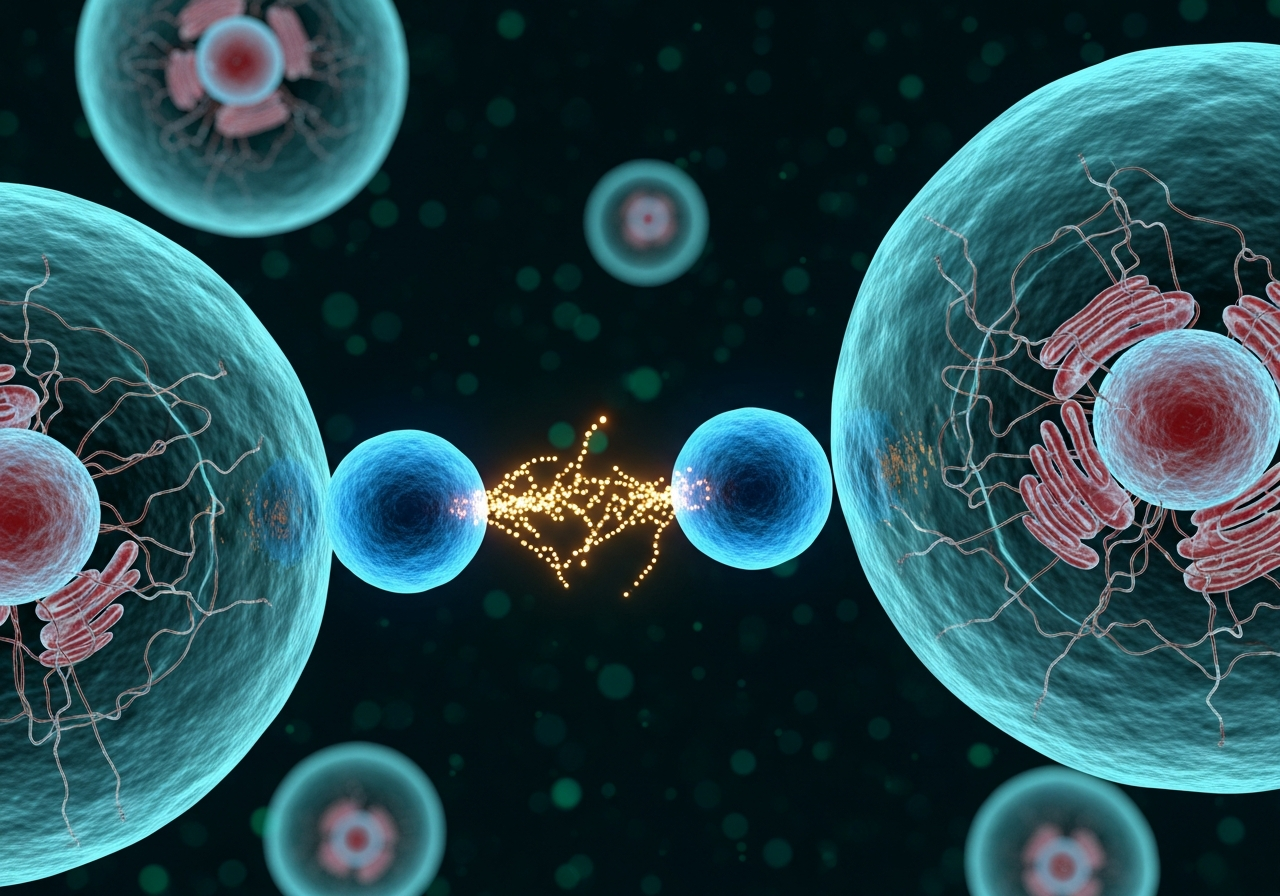
The Role of Exosomes in Modern Research
Exosomes represent one of the most exciting frontiers in regenerative medicine and biotechnology research. These nano-sized extracellular vesicles are revolutionizing our understanding of cell-to-cell communication and opening new...

BPC-157 + TB-500 Stack: Dual-Pathway Tendon-Repair Research Protocols
The combination of BPC-157 and TB-500 is frequently studied in tendon-repair models. This article reviews the dual-pathway mechanisms and practical laboratory protocols.

Tesamorelin Visceral Adipose Research: GHRH-Analog Mechanisms for Australian Labs
Tesamorelin, a GHRH analogue, is an important tool in visceral adipose tissue research. This article outlines the mechanisms currently under investigation in Australian laboratory settings.

Tirzepatide Purity & HPLC Verification: Third-Party COA Standards for Research
When selecting tirzepatide for metabolic research, independent verification of purity is essential. This article explains the analytical standards laboratories rely on when working with research-grade tirzepatide.

Retatrutide vs Tirzepatide: Head-to-Head Receptor Pharmacology 2026 Update
With both peptides now widely available for research, laboratories are conducting more direct comparative studies. This article summarises the latest receptor-level differences observed in 2026 in-vitro models.

Semaglutide Pharmacokinetics: Half-Life and Bioavailability in Research Models
Semaglutide is one of the most studied peptides in metabolic research. Understanding its pharmacokinetic profile is essential for designing precise laboratory experiments.

BPC-157 + TB-500 Stack: Dual-Pathway Research in Tendon Models
The combination of BPC-157 and TB-500 is intensively studied in many laboratories for its effects in tendon repair models. This post summarizes current dual-pathway findings.

Weight Management Peptides in Research
The field of weight management research has been transformed by peptide-based therapeutics. GLP-1 receptor agonists and related compounds represent some of the most significant advances in metabolic science, offering new approaches to...

TB-500 Research-Grade Peptide: Actin Sequestration & Tissue Repair Models
TB-500 is a key tool in tissue-repair research thanks to its specific interaction with actin. This article reviews the mechanisms and laboratory applications currently under study.