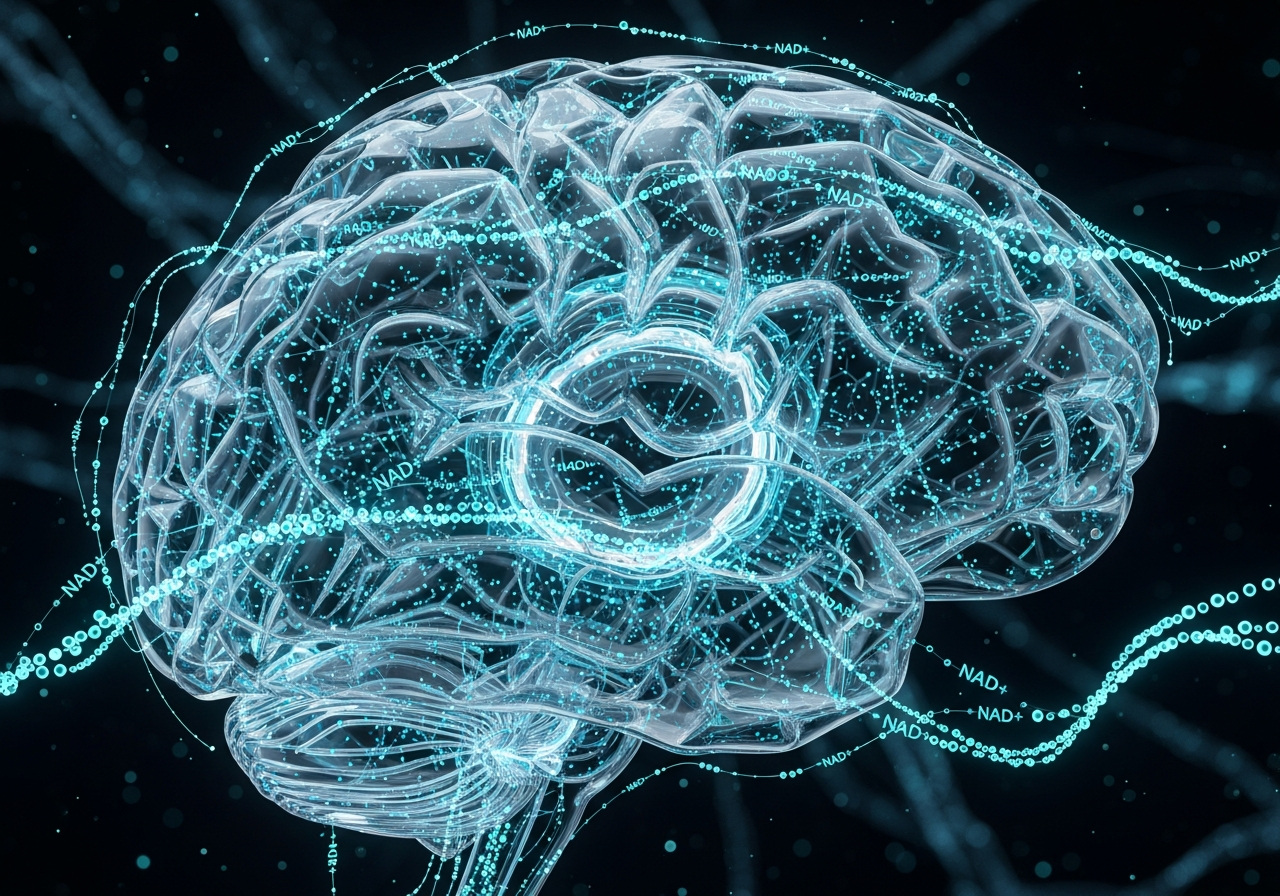
NAD+ (Nicotinamide Adenine Dinucleotide) has emerged as one of the most promising molecules in longevity research. This essential coenzyme is involved in hundreds of metabolic processes and plays a central role in cellular energy production and DNA repair.
What is NAD+?
NAD+ is a coenzyme found in all living cells. It exists in two forms: NAD+ (oxidized) and NADH (reduced), cycling between these states as it facilitates electron transfer in metabolic reactions. This electron shuttle is fundamental to energy production in mitochondria.
Human NAD+ levels drop approximately 50% by the time we reach our 40s, correlating with cellular repair deficits and age-related decline.
Key Mechanisms and Preclinical Evidence
NAD+ supports critical biological functions:
- Energy Production: Essential for mitochondrial function and ATP synthesis
- DNA Repair: Activates enzymes like PARPs that maintain genomic integrity
- Sirtuin Activation: Supports SIRT1 and other sirtuins that regulate metabolism and aging
- Cellular Communication: Facilitates proper cell signaling and stress responses
Studies in yeast, worms, mice, and human cells show that elevating NAD+ extends lifespan or improves resilience. NMN enhanced endothelial cell growth and, combined with hydrogen sulfide precursors, doubled exercise capacity in aged mice equivalent to human 90-year-olds.
2024-2025 Clinical Trials and Research
Ongoing trials focus on NAD+ precursors for age-related conditions:
NR (Nicotinamide Riboside):
- Mixed cognition results in Alzheimer's and mild cognitive impairment
- Prior combinations with metabolic activators (L-carnitine) improved memory
- Safe, well-tolerated in ataxia-telangiectasia patients over 2 years
- Improved motor coordination and eye movements in the longest NR trial to date
NMN (Nicotinamide Mononucleotide):
- Improved insulin sensitivity in postmenopausal women
- Sex-specific effects observed in mouse studies
- Recent study testing 450mg for insulin sensitivity
Other clinical trials target long COVID, multiple sclerosis, and various metabolic conditions.
Important 2025 Research Update
A significant 2025 mouse study challenged the NAD+ hypothesis by reducing skeletal muscle NAD+ by 85%, far beyond typical age-related 30% drops, without accelerating aging, muscle weakness, or metabolic issues. This questions whether NAD+ decline is a primary driver of frailty or a consequence of other aging processes.
NAD+ Precursors
Several compounds can boost NAD+ levels:
NMN (Nicotinamide Mononucleotide): Direct NAD+ precursor that efficiently raises cellular NAD+ levels
NR (Nicotinamide Riboside): Well-studied precursor with good bioavailability and safety profile
Niacin (Vitamin B3): Traditional form that can raise NAD+ but may cause flushing
Tryptophan: Amino acid that contributes to NAD+ via the kynurenine pathway
Current Understanding and Limitations
Evidence is stronger in preclinical models than humans. Key points:
- No serious side effects reported in listed clinical studies
- Benefits vary between individuals
- Sex-specific responses need further confirmation
- Long-term human longevity data is still preliminary
The research continues to evolve, with scientists working to understand the complex relationship between NAD+ metabolism and aging.
Related research articles
Research products mentioned
Important Notice: This article is for informational and educational purposes only. All products mentioned are exclusively for scientific research and are not intended for human consumption or therapeutic use.