KPV vs LL-37: Anti-Inflammatory and Antimicrobial Peptide Research Overview
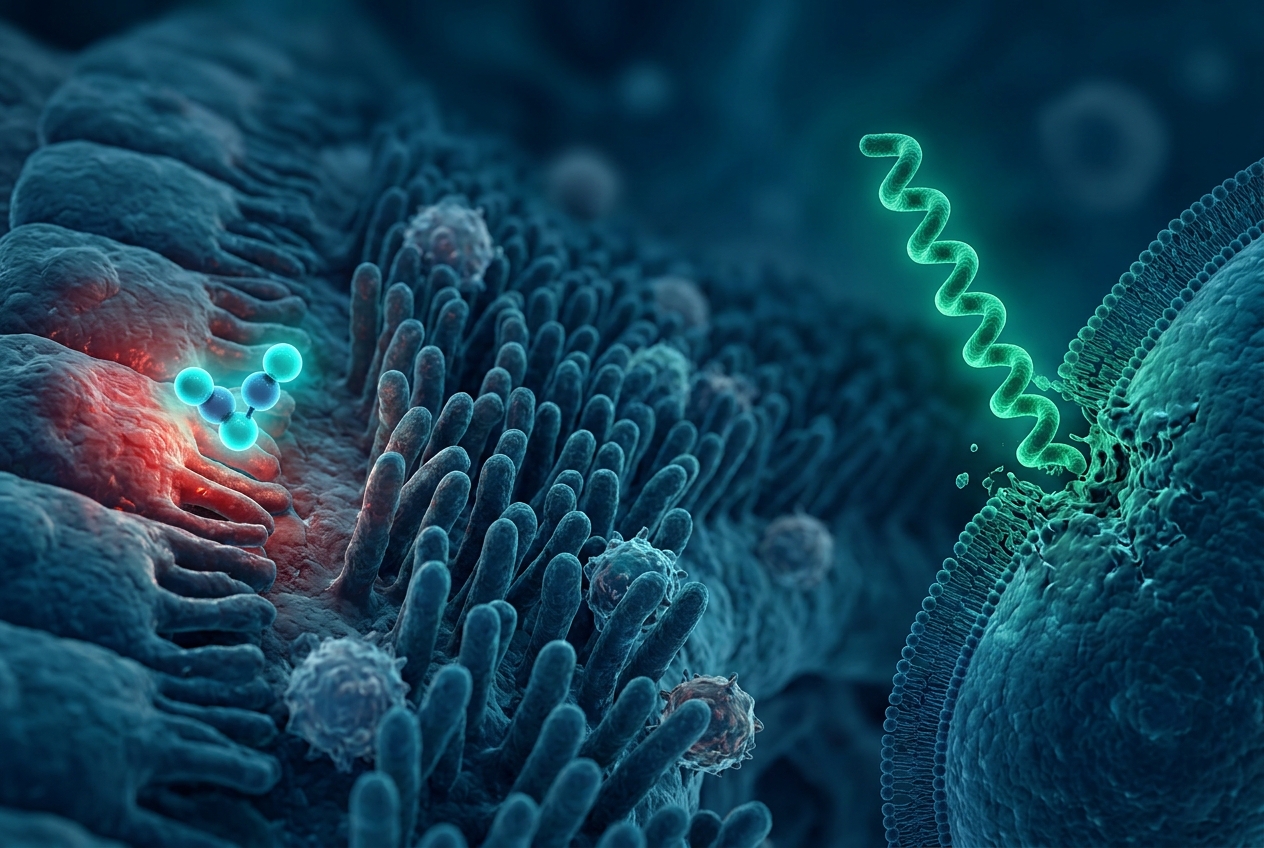
KPV and LL-37 are both studied in inflammation and host-defence research, but they are structurally and functionally very different peptides. KPV is a tripeptide (lysine-proline-valine), the C-terminal fragment of alpha-melanocyte-stimulating hormone (alpha-MSH), studied mainly for anti-inflammatory signalling. LL-37 is the only human cathelicidin, a 37-residue amphipathic peptide studied for direct antimicrobial activity and broad immunomodulation. Buyers sometimes group them as "healing peptides", but their mechanisms barely overlap.
Head-to-head reference
| Feature | KPV | LL-37 |
|---|---|---|
| Origin | C-terminal fragment of alpha-MSH | Human cathelicidin (hCAP18 C-terminus) |
| Sequence | Lys-Pro-Val | 37-residue amphipathic alpha-helix |
| Residue count | 3 | 37 |
| Molecular weight | about 342 Da | about 4493 Da |
| Primary research pathway | NF-kB downregulation, anti-inflammatory | Membrane disruption, LPS neutralisation, chemotaxis |
| Main research domain | Gut and dermal inflammation | Antimicrobial, wound defence, immunomodulation |
| Direct antimicrobial action | Minimal | Strong (broad-spectrum in vitro) |
| Common format | Lyophilised powder, nasal/oral research prep | Lyophilised powder |
KPV is small, stable, and easy to handle. Its research appeal is that it appears to carry the anti-inflammatory part of the alpha-MSH signal (NF-kB pathway downregulation) in a minimal three-residue package, without the pigmentation signalling of the full hormone. LL-37 is large, amphipathic, and functionally a host-defence molecule: it disrupts bacterial membranes directly, neutralises lipopolysaccharide, and recruits immune cells.
KPV: mechanism and research use
KPV is studied mainly in gut-inflammation and dermal-inflammation models. The cited mechanism is intracellular downregulation of NF-kB signalling and reduced pro-inflammatory cytokine output. Its small size and stability make it convenient for cell-culture work, and it is frequently paired with colitis-model and wound-model endpoints.
LL-37: mechanism and research use
LL-37 is studied as an antimicrobial and immunomodulatory peptide. Its amphipathic helix inserts into and disrupts microbial membranes, giving broad-spectrum activity in vitro, while separate work studies its role in chemotaxis, angiogenesis, and LPS neutralisation. Because its activity is concentration- and salt-sensitive, LL-37 research protocols pay close attention to buffer ionic strength.
Reconstitution and storage
Both ship as lyophilised powder. Typical handling:
- KPV: dissolves readily in bacteriostatic or sterile water; reconstituted stability about 30 days at 2 to 8 degC
- LL-37: dissolve in sterile water or dilute acetic acid per CoA guidance; it is more sensitive to ionic strength and repeated freeze-thaw
- Lyophilised stability: about 24 months at -20 degC for both
Use a reconstitution calculator for mcg-to-volume conversion. For LL-37, aliquot before freezing to avoid freeze-thaw degradation.
CoA requirements for bulk purchase
Require batch-level CoAs carrying:
- HPLC purity at or above 95.0% for LL-37 (longer peptides synthesise with lower typical purity than short fragments) and at or above 99.0% for KPV
- MS identity with observed vs theoretical mass
- Karl-Fischer water content under 8%
- Counter-ion content and identity
- LAL endotoxin under 0.25 EU/mg for any cell or antimicrobial assay (endotoxin cross-reacts with LL-37 research readouts, so this field matters more than usual)
Bulk sourcing considerations
- Purity expectations differ by length: do not reject an LL-37 batch for the purity threshold you would apply to a tripeptide.
- Endotoxin is critical for LL-37: its LPS-neutralising activity makes residual endotoxin a direct confounder.
- Scale thresholds: per-gram breaks at 25 g, 100 g, and 500 g tiers.
Working with PenLab Peptide
PenLab stocks research-grade KPV and LL-37 in 10 g, 25 g, 100 g, and 500 g tiers with batch-level HPLC, MS, KF, counter-ion, and LAL endotoxin CoAs. Visit the bulk procurement portal or email sales@penlabpeptide.com.
Products are sold strictly for in-vitro laboratory research by KYC-verified institutional buyers. Not for human or veterinary use.
Gerelateerde onderzoeksartikelen
Genoemde onderzoeksproducten
Belangrijke Mededeling: Dit artikel is uitsluitend voor informatieve en educatieve doeleinden. Alle genoemde producten zijn uitsluitend voor wetenschappelijk onderzoek en niet bedoeld voor menselijke consumptie of therapeutisch gebruik.